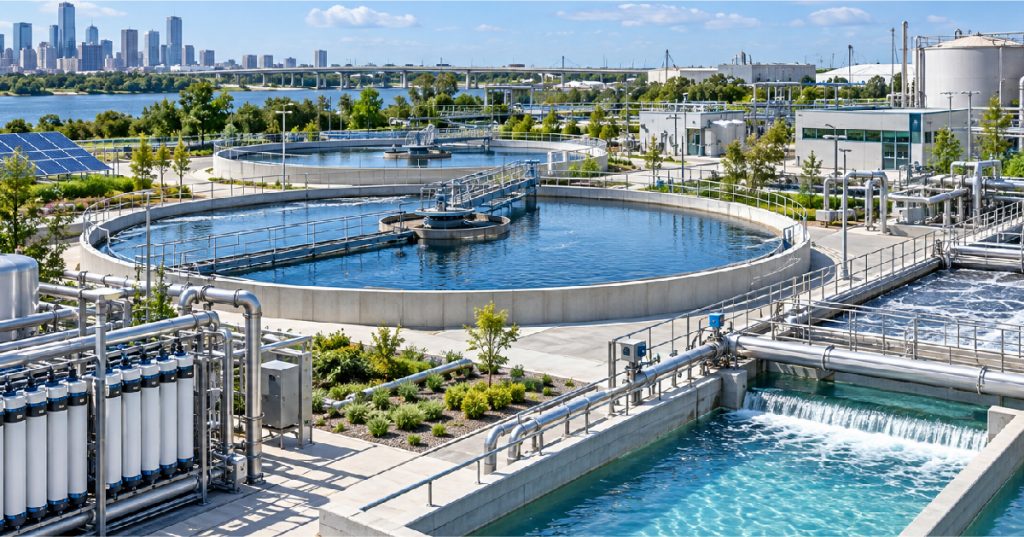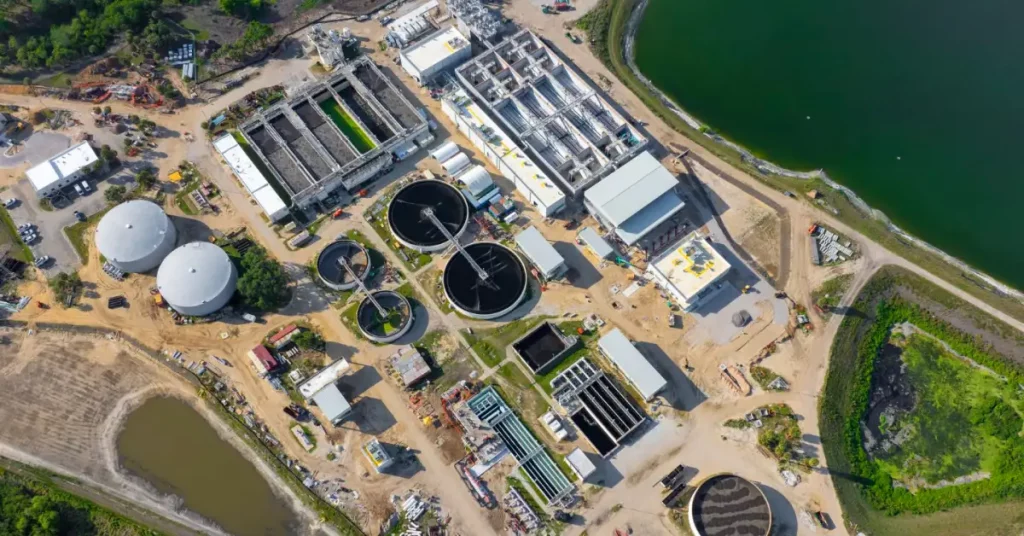

Industrial facilities are under increasing pressure to manage wastewater efficiently while reducing freshwater consumption and environmental impact.
Conventional effluent treatment focuses primarily on removing contaminants before discharge. A more integrated approach combines effluent treatment, water recycling, and resource recovery to recover usable water and reduce liquid waste.
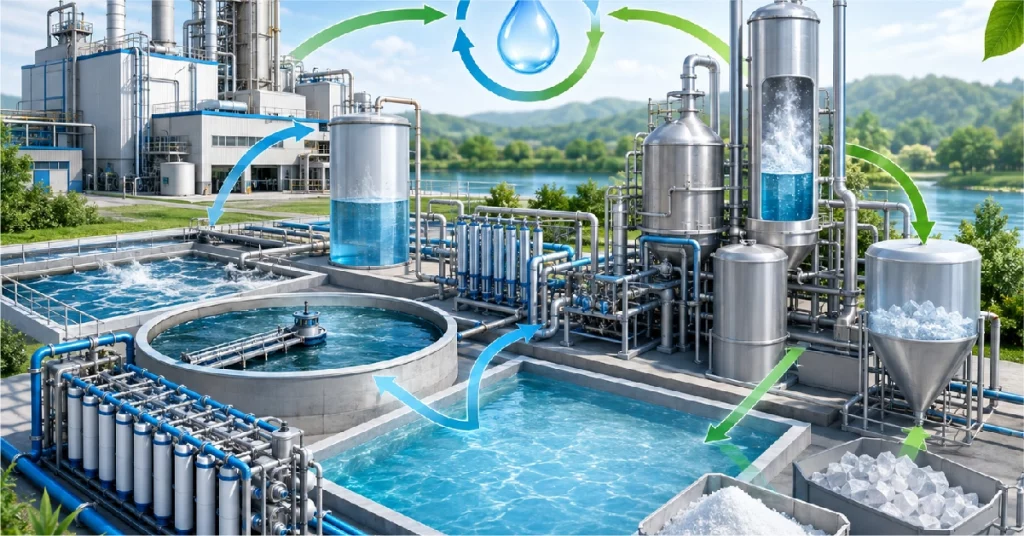
For industries pursuing Zero Liquid Discharge, this approach can help close the water cycle by treating wastewater, recovering water for reuse, and managing the remaining concentrated solids appropriately.
What Is Effluent Treatment?
Effluent treatment involves removing contaminants from industrial wastewater so that the treated water can be safely discharged or reused.
Industrial effluent can contain:
- Suspended solids
- Organic matter
- Chemicals
- Oils and grease
- Dissolved salts
- Heavy metals
- Industry-specific contaminants
An industrial effluent treatment solution is designed according to the wastewater characteristics, treatment capacity, discharge requirements, and intended reuse quality.
Why Resource Recovery Matters in Wastewater Treatment?
Treating wastewater only for discharge can leave opportunities for water recovery unused.
Resource recovery focuses on identifying useful outputs from wastewater treatment, particularly treated water that can be returned to industrial operations.
This can help industries:
- Reduce freshwater consumption
- Reduce wastewater discharge
- Improve water-use efficiency
- Support sustainability objectives
- Recover treated water for reuse
- Reduce pollution-related risks
Ion Exchange’s wastewater-treatment material identifies cost savings through water recycling, freshwater savings, sustainability benefits, and resource recovery through reuse of treated water in industrial operations.
How Does Effluent Treatment Support Water Reuse?
A typical treatment and recovery pathway can include:
Industrial effluent → Primary treatment → Biological treatment → Advanced treatment → Water recovery → Reuse
Primary Treatment
Screening, grit removal, clarification, and sedimentation help remove larger solids and reduce the initial pollutant load.
Biological Treatment
Biological processes use microorganisms to reduce biodegradable organic matter such as BOD and COD.
Technologies can include:
- Activated sludge
- MBBR
- SBR
- MBR
Advanced Treatment
Where higher-quality water is required for reuse, membrane technologies such as UF and RO can provide additional purification.
Ion Exchange’s supplied material identifies MBR, SBR, MBBR, and RO among the key technologies used to develop customised wastewater treatment and reuse systems.
What Is Zero Liquid Discharge?
Zero Liquid Discharge (ZLD) is a treatment approach designed to recover wastewater while preventing liquid effluent from leaving the treatment system for disposal.
A ZLD system generally combines water-recovery technologies with processes for concentrating and managing the remaining solids.
The supplied Ion Exchange material describes ZLD systems as recovering and reusing treated wastewater while safely disposing of the resulting solids.
ZLD can therefore help industries move from a discharge-based model towards a closed-loop water-management approach.
How Does a ZLD Wastewater Treatment Plant Work?
The exact configuration depends on the wastewater characteristics and required recovery level, but a ZLD system can involve several stages.
Effluent Treatment
The wastewater first undergoes appropriate physical, chemical, and biological treatment.
Membrane Treatment
Membrane systems such as RO can recover a significant portion of treated water while concentrating dissolved contaminants in the reject stream.
Concentrate Treatment
The concentrated stream can undergo further treatment to recover additional water.
Evaporation and Crystallisation
ZLD systems can integrate evaporation and crystallisation to recover water from concentrated waste streams and convert the remaining dissolved solids into a manageable solid residue.
Ion Exchange’s supplied technical material specifically identifies ZLD systems as integrating RO with evaporation and crystallisation technologies to recover water from waste streams.
Technologies Used in Resource Recovery and ZLD
Membrane Bioreactor
MBR combines biological treatment with membrane filtration to produce high-quality treated effluent suitable for further purification and reuse.
Reverse Osmosis
RO provides advanced removal of dissolved salts and other impurities and can recover treated water for reuse.
Nanofiltration
NF can provide selective removal of dissolved contaminants and may be incorporated into advanced wastewater-recovery systems.
Evaporation
Evaporation concentrates dissolved contaminants while recovering water from concentrated streams.
Crystallisation
Crystallisation converts concentrated dissolved solids into a solid form that can be managed separately from the recovered water.
The appropriate combination depends on the wastewater chemistry, recovery target, operating conditions, and required final water quality.
Benefits of Zero Liquid Discharge Systems
Maximum Water Recovery
ZLD is designed to recover water from wastewater streams rather than allowing treated liquid effluent to leave the site.
Reduced Freshwater Dependency
Recovered water can be reused for suitable industrial applications, reducing the requirement for fresh water.
Reduced Liquid Waste
The process minimises or eliminates liquid discharge and converts the remaining concentrated waste into a solid residue.
Improved Resource Efficiency
Water becomes a recoverable resource within the industrial water cycle rather than simply a waste stream.
Support for Sustainability Goals
Water recycling and reduced wastewater discharge can contribute to broader environmental and resource-efficiency objectives.
Industries That Can Benefit From ZLD
ZLD and advanced wastewater-recovery systems can be considered for industries generating complex or high-TDS effluents.
Pharmaceuticals
Pharmaceutical wastewater can contain complex chemical contaminants requiring advanced treatment.
Textiles
Textile effluent can contain dyes, chemicals, suspended solids, and dissolved contaminants that may require multi-stage treatment and recycling.
Chemicals
Chemical industries can generate high-TDS and other complex effluents where water recovery is particularly important.
Food & Beverage
Organic-rich wastewater can require biological treatment followed by advanced purification where water reuse is required.
Power
Power plants use large volumes of water for cooling and utilities, making wastewater recycling an important consideration.
The supplied Ion Exchange material identifies pharmaceuticals, textiles, food and beverage, power, and chemical industries among sectors requiring wastewater treatment.
Factors to Consider Before Selecting a ZLD System
A ZLD wastewater treatment plant should be designed around the specific wastewater rather than using a standard configuration.
Wastewater Characteristics
Parameters such as:
- Flow rate
- BOD
- COD
- TSS
- TDS
- pH
- Hardness
- Specific chemicals
can influence technology selection.
Water Recovery Target
The required recovery level determines how much of the treated wastewater needs to be recovered and how the concentrate should be managed.
Available Space
Membrane, evaporation, and crystallisation systems can have different footprint requirements and should be evaluated against available plant space.
Energy Requirements
Advanced treatment, evaporation, and crystallisation can require significant energy, making energy efficiency an important consideration during system design.
Reuse Requirements
The intended use of recovered water determines the required treatment quality and membrane configuration.
Ion Exchange Effluent Treatment and ZLD Solutions
Ion Exchange provides integrated wastewater-treatment and ZLD solutions combining biological, membrane, filtration, and advanced treatment technologies.
Its capabilities include:
- Effluent treatment plants
- MBR
- MBBR
- SBR
- RO
- Water recycling
- Resource recovery
- ZLD systems
Ion Exchange’s documented ZLD experience includes a 10 MLD zero-discharge system at Angeripalayam CETP in Tirupur. The system combined flat-sheet MBR and two-stage RO for effluent recycling, followed by silica removal, sand filtration, and nanofiltration for treatment of the RO reject stream.
The project demonstrated how biological, chemical, resin, and membrane technologies can be evaluated and integrated to develop a water-recovery and zero-discharge system.
How to Evaluate an Effluent Treatment and ZLD Partner?
When selecting an industrial effluent treatment solutions provider, industries should consider the complete treatment cycle rather than individual equipment.
Look for:
- Treatment expertise: Ability to manage physical, chemical, biological, and advanced treatment.
- Membrane capability: Experience with UF, NF, RO, and MBR where required.
- Water-reuse expertise: Ability to design treatment around the intended reuse quality.
- ZLD capability: Experience integrating membrane treatment with evaporation and crystallisation.
- Resource recovery approach: Ability to identify opportunities to recover treated water and other useful resources.
- Lifecycle support: Technical assistance, operation, maintenance, and process optimisation.
Conclusion
Effective effluent treatment can do more than prepare wastewater for discharge. By combining treatment, water recycling, resource recovery, and ZLD, industries can reduce freshwater dependency and move towards a more efficient closed-loop water system.
ZLD systems integrate treatment and advanced recovery technologies to minimise liquid discharge while recovering water for reuse.
Ion Exchange combines biological, membrane, and advanced wastewater-treatment technologies to develop customised recycling and ZLD solutions according to individual wastewater characteristics.
Connect with Ion Exchange experts for effluent treatment, wastewater recycling, resource recovery, and ZLD solutions designed around your industrial water-management requirements in the USA.
FAQs
What is resource recovery in wastewater treatment?
Resource recovery involves recovering useful outputs from wastewater, particularly treated water that can be returned to suitable industrial applications.
What is Zero Liquid Discharge?
Zero Liquid Discharge is a wastewater-treatment approach designed to recover water while preventing liquid effluent from leaving the treatment system for disposal. The remaining concentrated material is managed as solid waste.
How does ZLD help reduce freshwater consumption?
ZLD systems recover water from wastewater streams and make it available for suitable reuse applications, reducing dependence on fresh water.
What technologies are used in ZLD wastewater treatment?
Depending on the wastewater, ZLD systems can combine ETP processes, MBR, UF, NF, RO, evaporation, and crystallisation.
Is ZLD suitable for every industrial facility?
Not necessarily. Suitability depends on wastewater characteristics, required recovery, discharge requirements, available space, energy considerations, and the economics of water recovery.